


HORIZON EUROPE IM4CA project
About
Methane
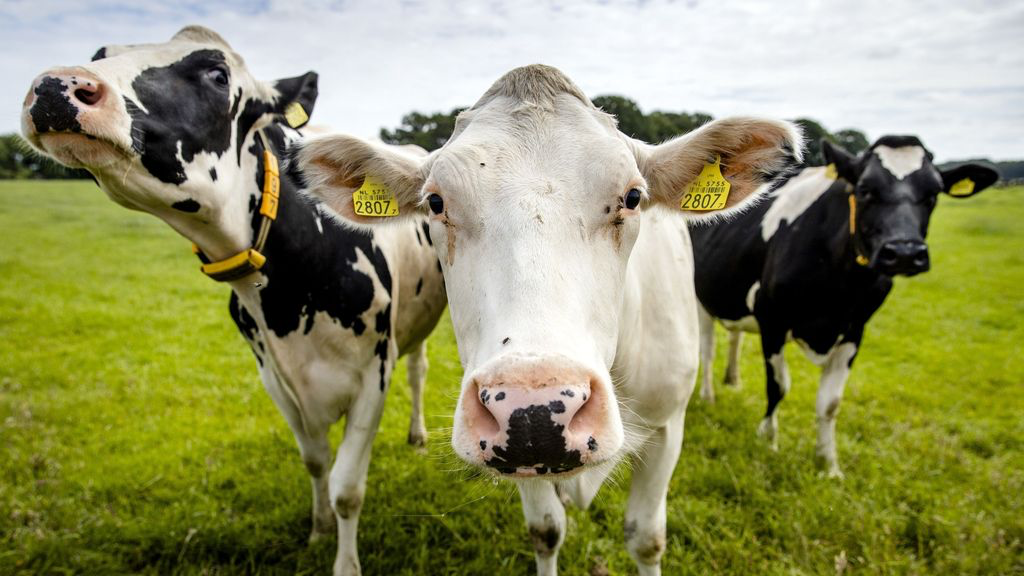
Methane (CH4) is a powerful greenhouse gas that has increased by a factor 2.5 since preindustrial times due to various human activities. Methane is best known as natural gas that is widely used for household heating, cooking, etc. However, the largest amount of methane is produced by microbes in the fermentation of organic material, for example in wetlands, landfills, but also in the digestive tracts of cows.

Climate change and the greenhouse effect are primarily caused by CO2. But methane and other non-CO2 greenhouse gases like nitrous oxide, halocarbons, and ozone together contribute significantly also. According to the latest IPCC assessment (AR6) methane alone is responsible for about 75% of the present-day global temperature rise due to CO2. So global warming is definitely not only about CO2. The non-CO2 greenhouse gases, particularly methane, require attention also.
Methane deserves extra attention because of its chemical reactivity, causing its lifetime in the atmosphere to be relatively short (about 9-10 years). This means that if we stop emitting methane today, the factor 2.5 increase since preindustrial times will disappear within a few decades. Because of this, the return on investments of climate policy to mitigate greenhouse gases is good for methane compared with the other greenhouse gases, which have a much longer lifetime.
The chemical reactivity of methane in the atmosphere has consequences for air quality (photochemical smog) and the lifetime of many other gases. Therefore, policy to reduce methane is like a double-sided knife, cutting not only climate warming but air pollution at the same time also.
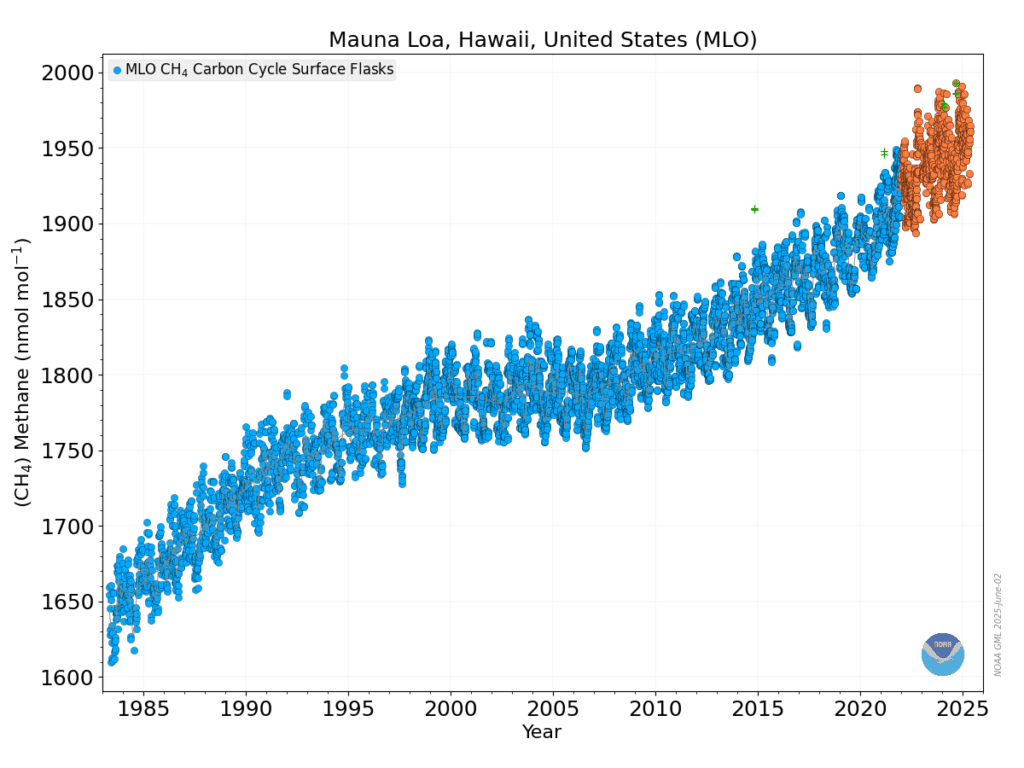
A complicating factor in reducing methane emissions is the long list of processes that contribute to its atmospheric increase and the poor quantification of several of them. This explains why recent variations in its background mixing ratio, observed by the global greenhouse gas monitoring network, are only poorly understood. The objective of the IM4CA project is to improve the effectiveness of climate policy aimed at methane, by reducing the most important remaining uncertainties in its emissions. Information on how to mitigate methane in the most cost-effective way will be transferred to policy makers at national, European and global level to support climate action.